Albert Charles Durston
Albert
Charles Durston was always
known as "Bert". He was born at Griswold and remained there for his
lifetime. He was educated at a country school named Hillsdale, about a
mile
from his home. In later years he served on school, church, municipal,
and hospital
boards at Griswold, Oak Lake, and Souris. He remained at home with his
mother
after the death of his father, marrying Bertha Charlton Donogh in 1937
and
moving to a neighbouring farm. At this farm, Charles Arthur and
Clifford Frank
were born. In 1943 the family moved to Griswold (23-9-23W) where he
farmed for
the remainder of his life. In 1964 Bert contracted cancer, and surgery
left him
with a colostomy which he had until his death in 1973. He is buried at
Griswold
in the Durston Family plot.
Bert
began and ended his formal education at Hillsdale School, a rural
school a short distance from the family home. The education offered here was a Three
R’s type
with grades from one to eight. Despite these humble beginnings, he was
a
voracious reader and would often read books and newspaper stories long
into the
evening. Between
his beginning and self
education he became well enough equipped to serve on school boards,
area
councils, as well as being a national representative for groups of
farmers, and
as a member of the wider area Hospital board, to name a few. These assignments
generally required the
reading and understanding of pertinent government acts and laws or
organizational constitutions in their discharge.
When
Bert was born in 1904, there were already 5 older children in the
family; the
eldest being about 12 years old. In
the
next decade there would be an additional six; making a family of 12
children..Eight
were girls, and four boys completed the count. Two died in infancy.
In
growing up, there must have been many events that were deemed
momentous. One of these might have been Bert’s Brother Billy leaving to fight in
WWI. He
would not return and is memorialized on the Vimy monument in France.
Happier
occasions could have included many weddings; Edith in 1915, Winnie in
1917,
Nellie in 1920, Anthony in 1929, Catherine in 1932 and Jessie in 1933,
and
Frank in 1948. Bert himself was married in 1937.
His
Father Arthur died in 1929 and one sister (Dora) remaining at home died
in
1939. Bert’s mother Emilie lived until 1949, long after he had
established
himself on a farm near Griswold.
Bert
was always a farmer. During his lifetime, the nature of farming would
change
from one needing a great deal of physical labour, to one where some of
that labour
could be relieved by mechanical contrivances.
He probably never used oxen as field locomotion, but he
was comfortable
with horses and owned several teams; one of which he had for many
years, extending
long after they were needed for field work. In their advancing ages,
Tommy and
Jiggs were useful for pulling winter sleds, hauling manure from the
barn, and
other light jobs. Son Clifford has memories of Tommy and Jiggs pulling
the stoneboat at a brisk run with Bert standing on the stoneboat and riding
it like
a surfer, and often with a small boy clinging to either leg, noting
that a
stoneboat has nothing to hang onto!
Horses
served another purpose as, during much of the 1940's, many of the
country residents didn't use cars during the winter. There were two
reasons for this; one was a scarcity of antifreeze during and following
war years,
and the other was the lack of ploughed roads to drive on. The family
farm was approximately two miles from town, and horses were used to go
back and forth. They pulled either a grain box wagon on sleighs, or a
sleigh with passenger seats. A livery barn in the village meant that
the
horses could be stabled for longer stops. In later years, Bert built an
enclosed van with seating for four and a small tin stove to make the
ride more comfortable. In winter, there were
daily rides to the village for the children to attend school. Clifford remembers his appendicitis attack which
required an operation in a Brandon hospital. First came a ride in the
heated but unsprung van to reach the village of Griswold, and then an
additional 25 miles in a borrowed car to Brandon.
As
farming progressed, Bert had a tractor. His first was a Gray tractor; a
cumbersome beast with one large rear wheel with a width of over five
feet, and
two front wheels for steering. Apparently unsuitable, this tractor was
committed to the junk heap and the large rear wheel was turned on its
side and
supported a fuel tank for many years. In 1943, after the purchase of
their new
farm, a new Farmall H was bought. Small by modern standards, this
tractor
pulled a variety of implements for many years and underwent several
overhauls and
upgrades.It was eventually augmented by the larger Farmall “M”, and
several
others as time went on.
Harvest
was a busy time, and in the early days, the grain was cut with a
binder, the
sheaves produced were grouped and placed upright, or “stooked” (an
operation
done by hand), and these stooks were later collected and thrown into a
threshing
machine which discarded the straw into a large pile and collected the
grain.
The entire operation needed a large crew of men and several teams of horses to function properly. All of
this
changed for Bert with the purchase of a swather and combine in about
1948. With
this equipment, a small number of people
could complete an entire harvest with much less work.
Bert’s
farming activities were not limited to grain farming, as the farm
always had a
number of cattle, chickens, and occasionally pigs. Milking was done
twice daily
and the milk served the family after being home pasteurized, but the
bulk of it
was separated, and the cream sold to local dairies. Skim milk fed
weanling
calves being prepared for market. Machine milking was purchased in the
50’s to
make this job easier as well.
During
the years of WWII, Bert and Bertha were occupied with the raising of 2
children. They had just moved onto a farm property near Griswold, and
were
beginning to adapt it to their liking. During this time, the
Commonwealth Air
Training operation was active, and one of the bombing targets was near
the
house. Training planes often flew directly over the property on their
way to
drop practice bombs, and some were erroneously dropped early, resulting
in
several explosions surprising the family and leaving a variety of shrapnel and some unexploded bombs behind.
Following
WWII, Manitoba undertook a program to provide electricity to numerous
farms in
an undertaking called Rural Electrification. Bert’s farm was
electrified soon
after the war and this opened up many possibilities for advancement at
both the
house and the barn such as lighting, refrigeration, hot and cold
running water,
automated milking, and many others.
|
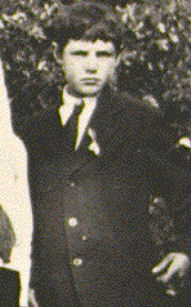
Bert circa 1915
|
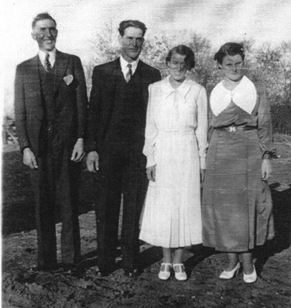
March 31, 1937 Wedding of Bert and
Bertha Donogh
L-R Frank Durston (Brother of
Bert), Bert, Bertha, Kathleen (cousin of Bertha)
(Frank and Kathleen would later
marry)
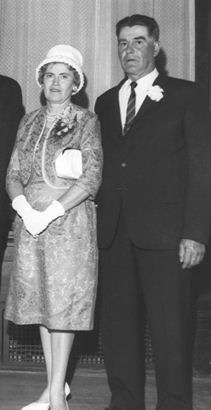
Right- Bert and Bertha c.1964
|
|
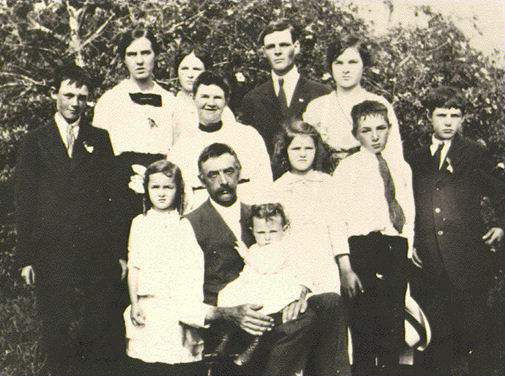
Bert
with Parents Arthur and Emilie, and Siblings.
Bert is at far right
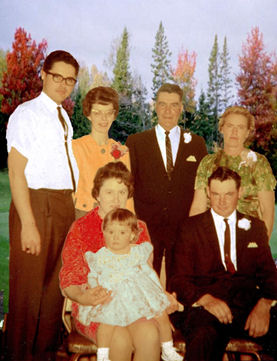
Family
of Bert and Bertha c.1964
Standing,
Clifford, Joyce, Bert, Bertha
Seated;
Donna (with Jackie ), and Art;
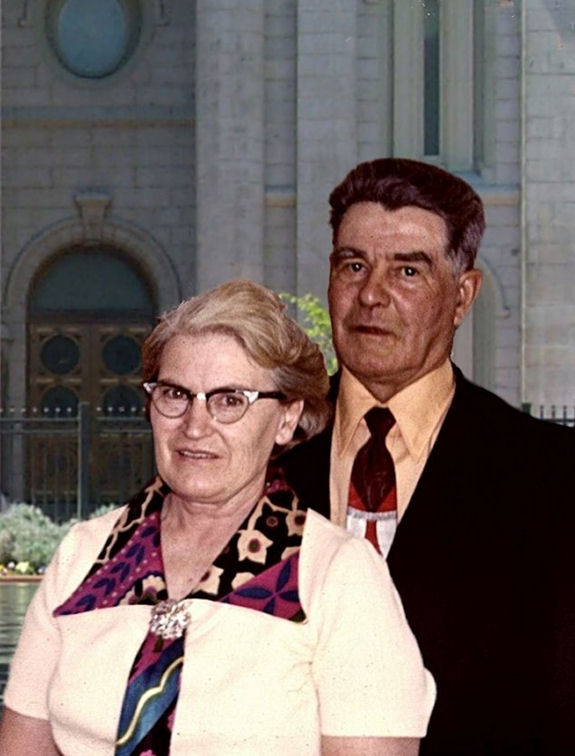
Bert
and Bertha Durston (C 1971) 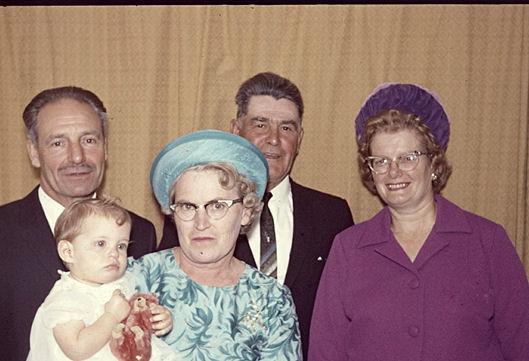
Photo
taken in Brandon on the occasion of the Baptism
of Grandchild Liana Durston (C. 1968)
L-R
Rod Bertrand, Liana Durston, Bertha Durston, Bert
Durston Peg Bertrand
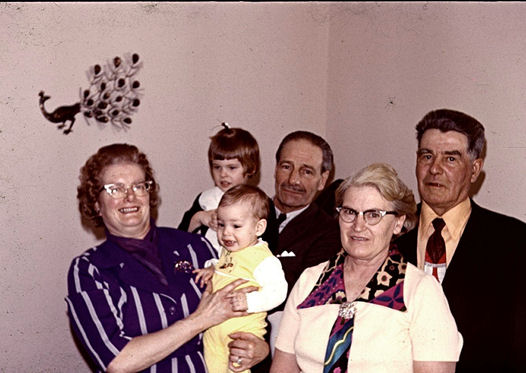
Photo
taken in Winnipeg on the occasion of the Baptism
of Grandchild Scott Durston (C. 1971)
L-R
Peg Bertrand, Liana Durston (Back) Scott Durston
(Front, Rod Bertrand, Bertha Durston, Bert Durston
|
|
|
|
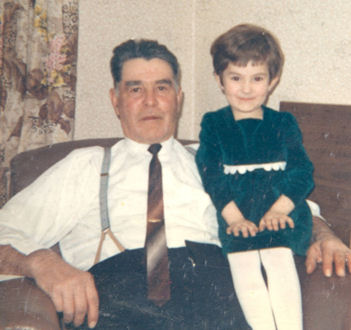
Bert and Jackie (B.1962)
|
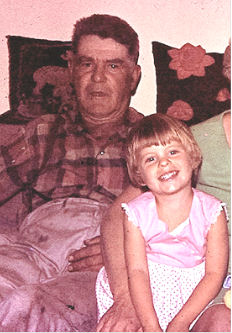
Bert and Liana(B1967)
|
|
|
|
|
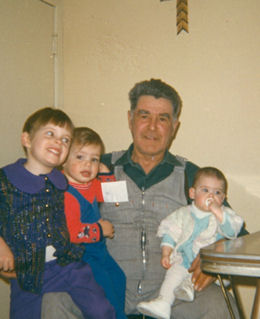
Bert with Liana, Scott
(B.1970), and Melanie
|
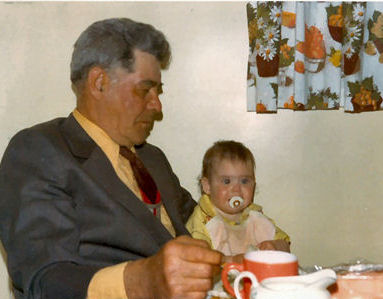
Bert and Melanie (B1971)
|
|
|
|
|
|
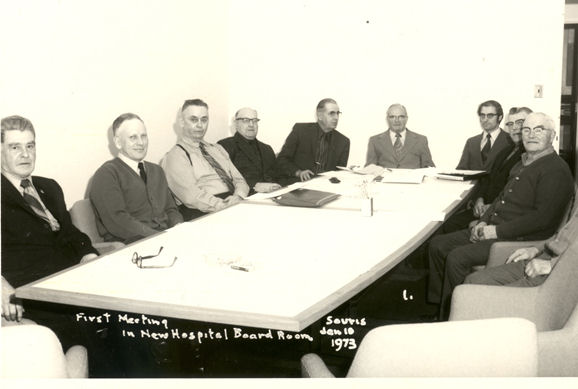
The
board of the then-new Souris Hospital.
Bert is seated at left. This was the
inaugural meeting held in January 1973. Bert appreciated the value of a
community hospital to rural communities. In 1964, he had had large
portions of
intestine removed to forestall the eventual spread of cancer, and had been left with a
colostomy to manage body
waste.
By
September of 1973, he would succumb to his battle with
cancer which had by then spread
and consumed
much of his body. He died in that same hospital September 17, 1973
Back to Home Page