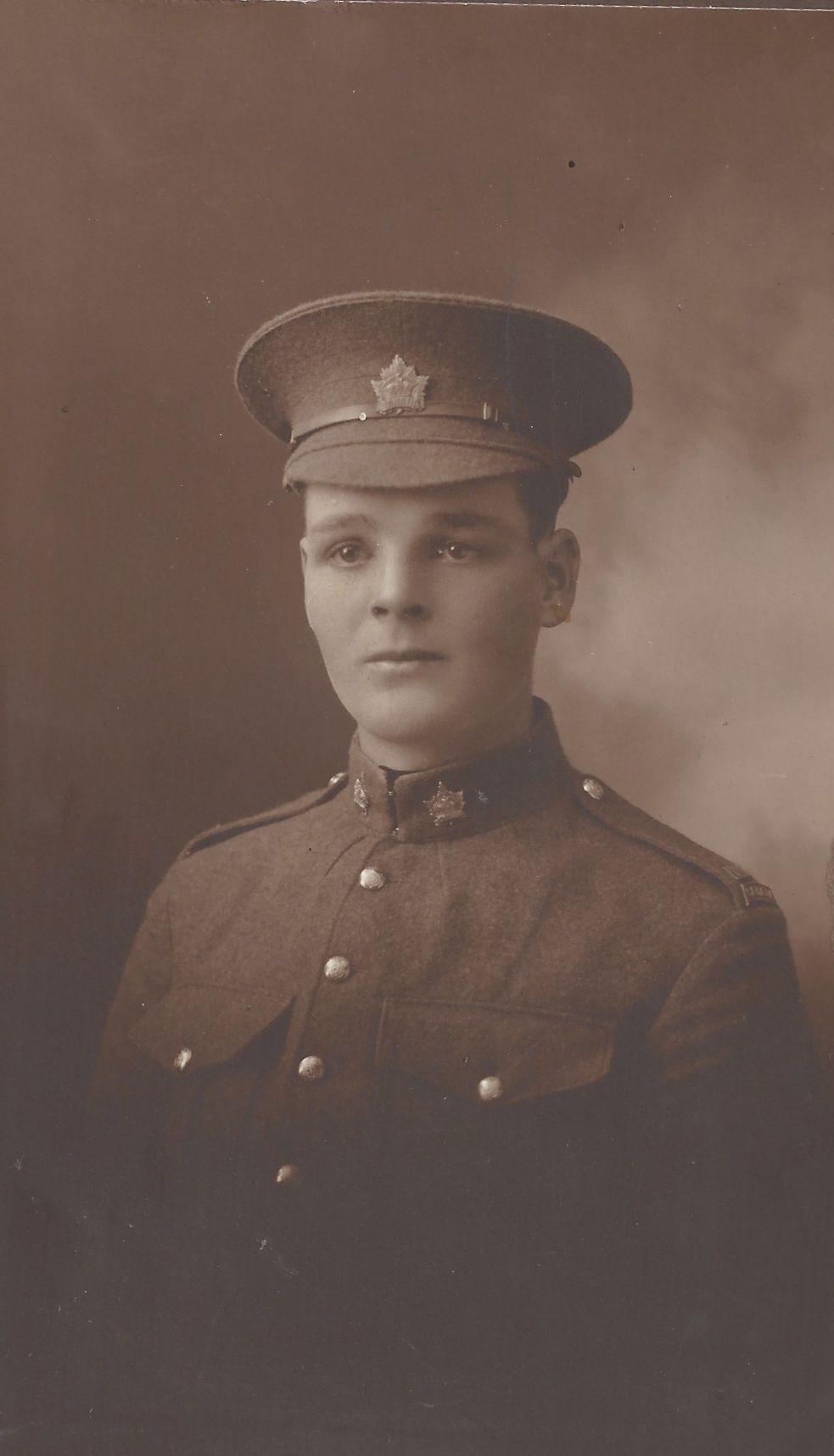
William Durston was the son of Arthur and Emilie Durston. He enlisted in the Canadian Army August 15, 1915 and served in France. He was killed in action in September 1916. The following is posted on the Commonwealth War Graves web site.
"...........................................
In Memory of
WILLIAM ARTHUR DURSTON
Private
150888
1st Canadian Mounted Rifles (Saskatchewan Regt.)
who died on
Friday, 15th September 1916.
Commemorative Information
| Memorial: | VIMY MEMORIAL, Pas de Calais, France |
| Location: | Canada's most
impressive tribute overseas to those Canadians who fought and gave
their lives in the First World War is the majestic and inspiring Vimy
Memorial, which overlooks the Douai Plain from the highest point of
Vimy Ridge, about eight kilometres northeast of Arras on the N17
towards Lens. The Memorial is signposted from this road to the left,
just before you enter the village of Vimy from the south. The Memorial
itself is someway inside the memorial park, but again it is well
signposted. The Memorial does more than mark the site of the engagement
which Canadians were to remember with more pride than any other
operation of the First World War. It stands as a tribute to all who
served their country in battle in that four-year struggle, and
particularly to those who gave their lives. At the base of the
Memorial, these words appear in French and in English: TO THE VALOUR OF
THEIR COUNTRYMEN IN THE GREAT WAR AND IN MEMORY OF THEIR SIXTY THOUSAND
DEAD THIS MONUMENT IS RAISED BY THE PEOPLE OF CANADA Inscribed on the
ramparts of the Memorial are the names of over 11,000 Canadian soldiers
who were posted as "missing, presumed dead" in France. The land for the
battlefield park, 91.18 hectares in extent, was (as stated on a plaque
at the entrance to the Memorial) "the free gift in perpetuity of the
French nation to the people of Canada". Eleven thousand tonnes of
concrete and masonry were required for the base of the Memorial: and
5,500 tonnes of "trau" stone were brought from Yugoslavia for the
pylons and the sculptured figures. Construction of the massive work
began in 1925, and 11 years later, on July 26, 1936, the monument was
unveiled by King Edward VIII. The park surrounding the Memorial was
created by horticultural experts. Canadian trees and shrubs were
planted in great masses to resemble the woods and forests of Canada.
Around the Memorial, beyond the grassy slopes of the approaches, are
wooded parklands. Trenches and tunnels have been restored and preserved
and the visitor can picture the magnitude of the task that faced the
Canadian Corps on that distant dawn when history was made. ............................"[end of quote Commonwealth War Graves Commission] |
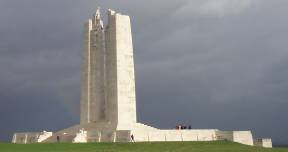
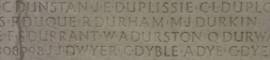
The Canadian Memorial seen from the parking lot. William’s name is inscribed on the Vimy monument, signifying that there is no known grave. There are 11,200 names in total on that monument. |
William’s name on the monument |
|||||
 |
|
|||||
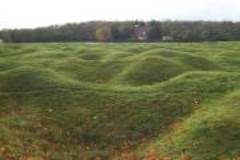
| Land cratered and hilled by WWI bombs. 20% of these exploded at the time. Most of the rest have been discovered and disarmed since. The Canadians had 1 million rounds ready for their advance in 1917 |
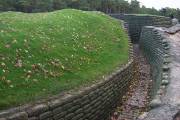
These are the Canadian trenches, now made comfortable for tourists with concrete sandbags and drainage. |
|||||
|
Was William Durston Killed at the Battle of Vimy? The
battle of Vimy Ridge was fought in the Spring
of 1917 by Canadian Forces, and, by April 12, 1917, the Canadians had
prevailed
and controlled the ridge, at a cost of 3,598 men killed and 7,104
wounded. [ref
Wikepedia]. William
was killed September 15, 1916, so he was
not part of this particular battle. The memorial is intended to also
serve
as a
memorial for those who died elsewhere in France, and at other
times than
the battle of Vimy. In William's case, he was a member of the 1st
Canadian
Mounted Rifles (Saskatchewan Regt.), and this regiment was part of the
8th
Infantry Brigade. The four battalions of this Brigade were formed from
six
Canadian Mounted Rifle regiments. In turn the 8th Infantry Brigade was
part of
the larger Canadian 2nd Infantry Division. According
to Wikepedia; "The
British 8th Division was a Regular
Army division that was formed by combining battalions returning from
outposts
in the British Empire at the outbreak of the First World War.
Major-General F.
Davies took command on 19 September 1914. The division moved to France
in
November, 1914, following the First Battle of Ypres. The division
fought on the
Western Front for the duration of the war, taking part in the Battle of
Neuve
Chapelle, the Battle of Aubers Ridge, the Battle of the Somme (1916)
and the
Third Battle of Ypres."
The
Battle of the Somme began July 1, 1916 with an
intense British attack, and enjoyed some early success, but as the
struggle
drew on into August and September, the Germans had strengthened
somewhat and
were a more formidable opponent. On September 15, 1916, the British
made a
concentrated effort in the Battle of Flers-Courcelette. This battle was
notable
because newly developed tanks were used by the British, something no
one had
ever done previously. Again, full success evaded the British, and it
was not
until the Battle of Vimy Ridge that this area was more fully secured.
The
Canadian role on September 15 was the successful capture of the town of
Courcelette, apparently with the assistance of one of the tanks. Elsewhere in family documents, a family history was submitted to a 1967 publication for a community project called "Bridging the Years, a Griswold Centennial Booklet". It states in part "..........The eldest son, "William" enlisted with the 1st Canadian Mounted Rifles and was killed in action in the Battle of Causelette (sic.) on Sept. 15, 1916...." |
||||||
 |
 |
|
|
|
 |
 |
|
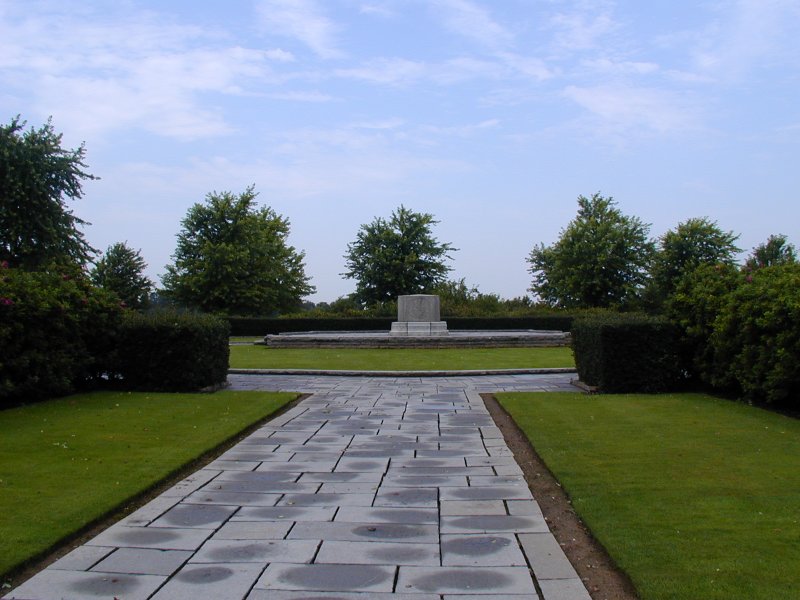
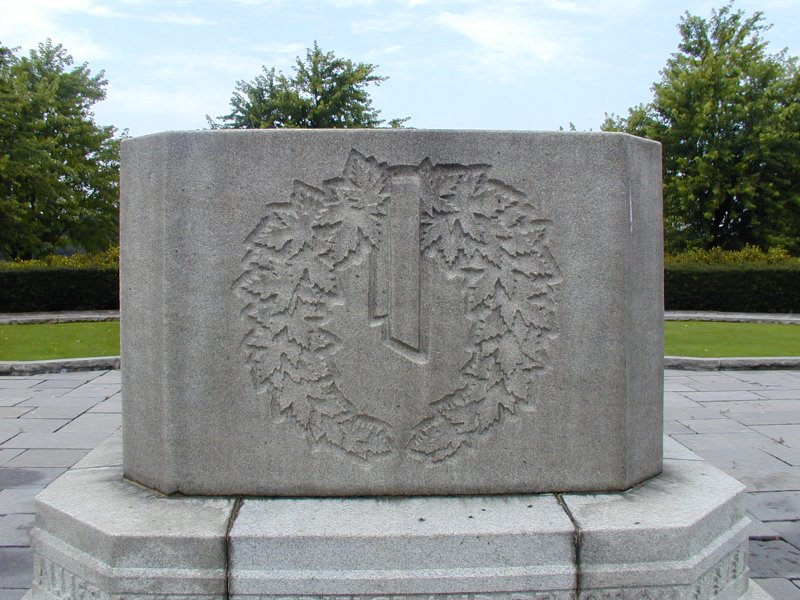
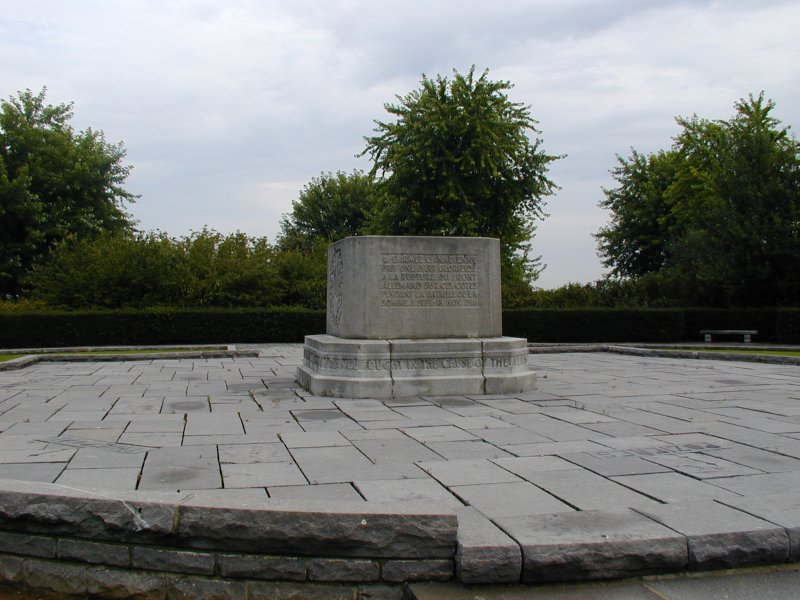
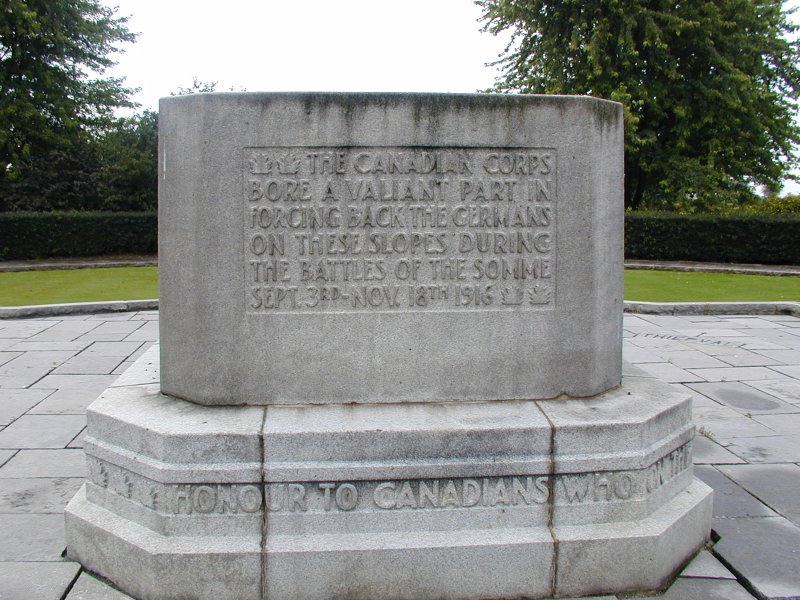
The monument at
Courcelette to honour the Canadian soldiers
–
Seen from a distance and the front and rear of the monument
|
|
 |
 |
|
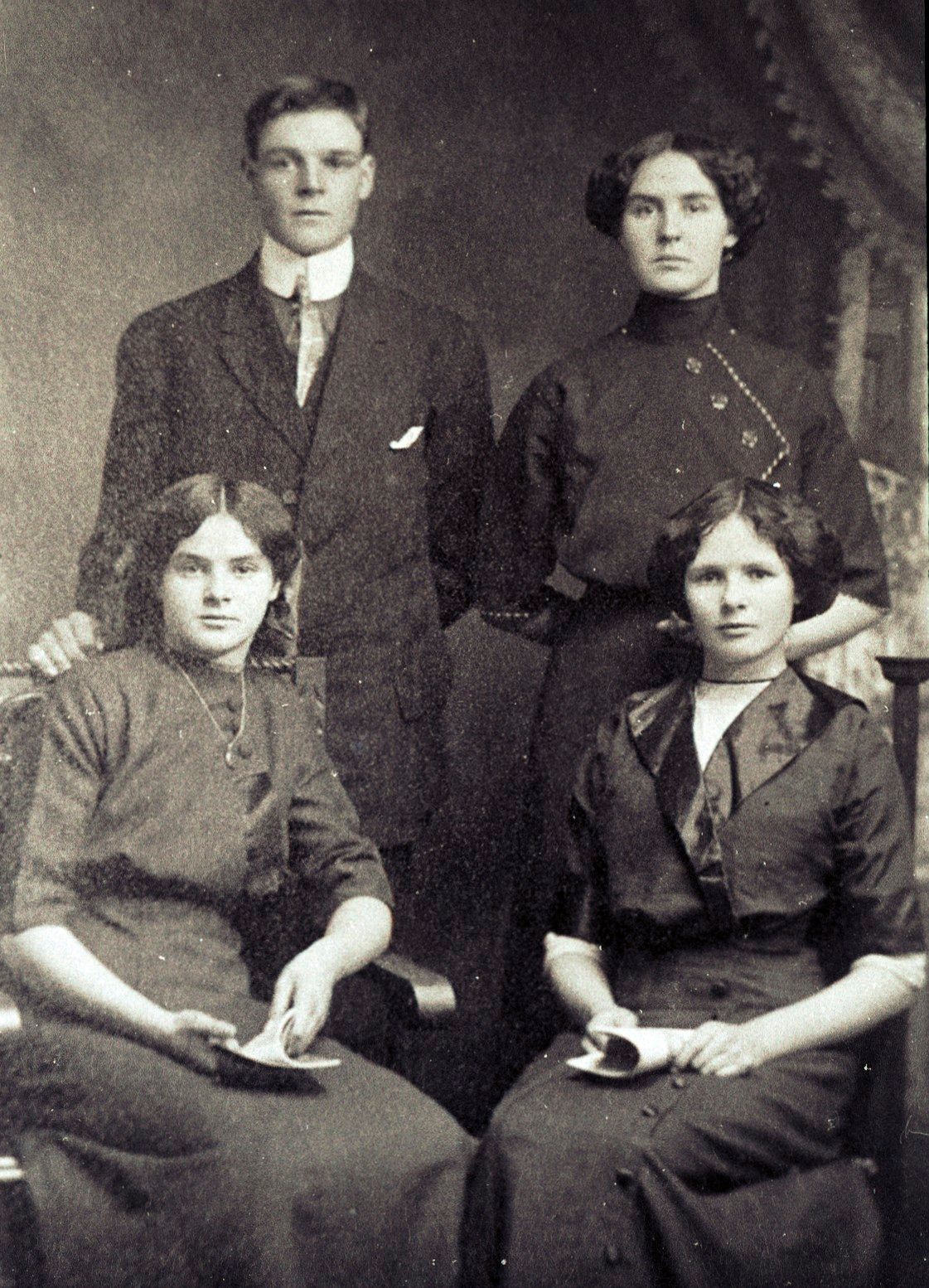
William shown here with his Sisters Edith, Nellie, and Winnie. (There were eight more younger siblings in his family) |
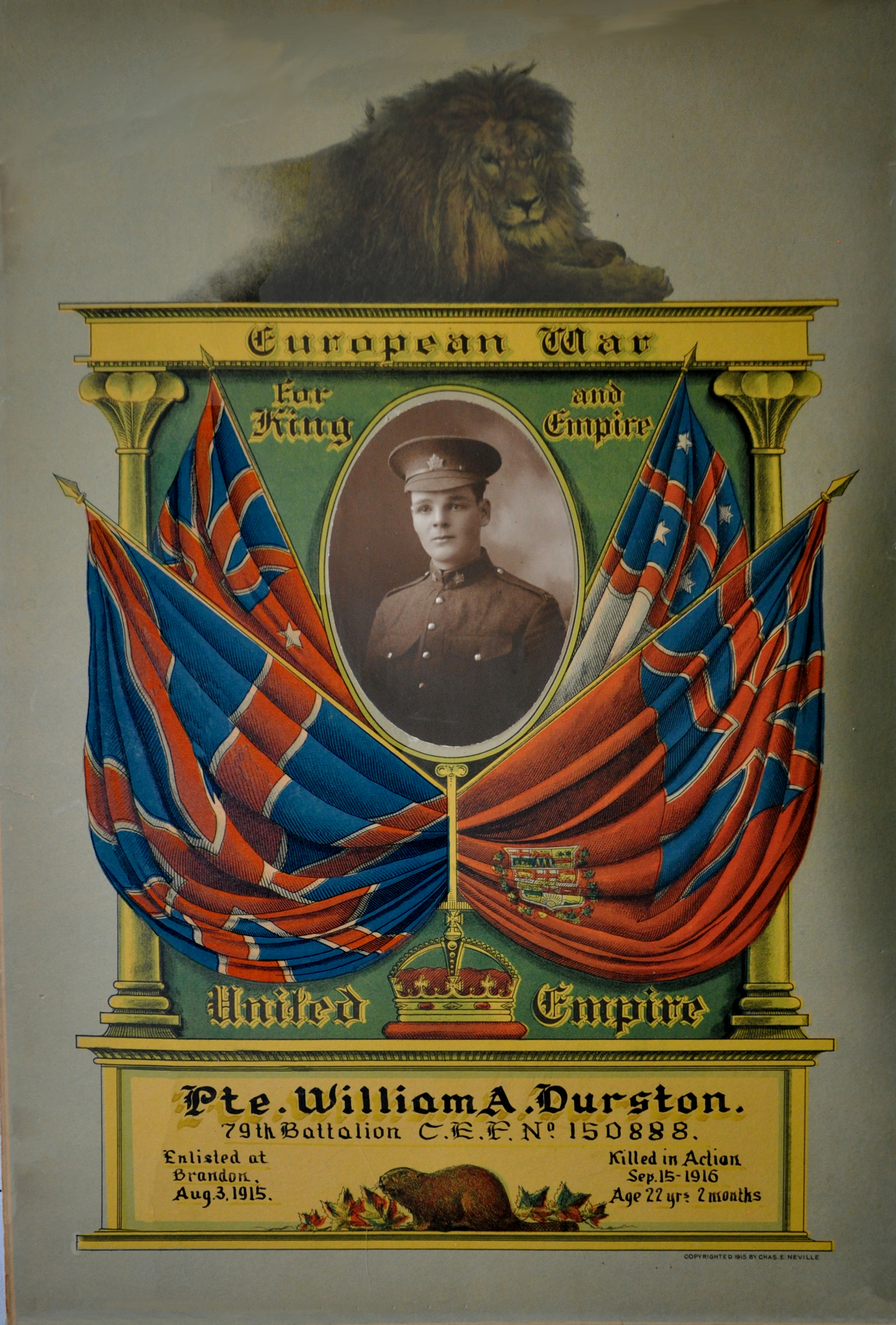
A Poster-sized memorial to William which was framed and hung over his Mother's bed until her death in 1949. |
|
|
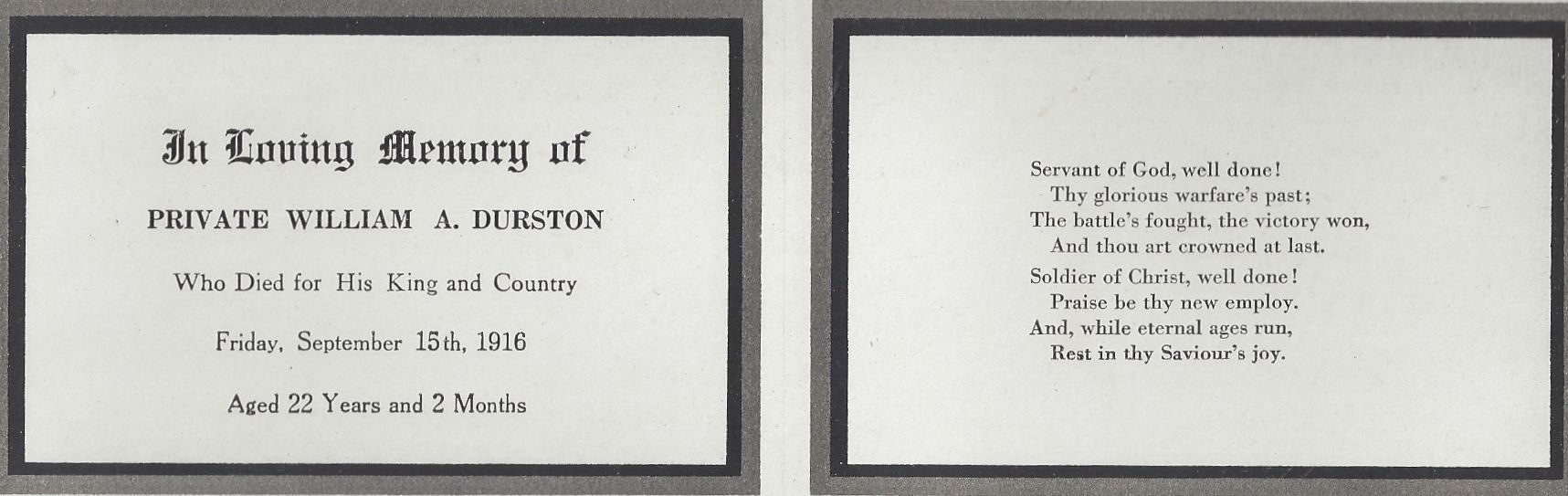
The obituary card for announcement to the home community |